
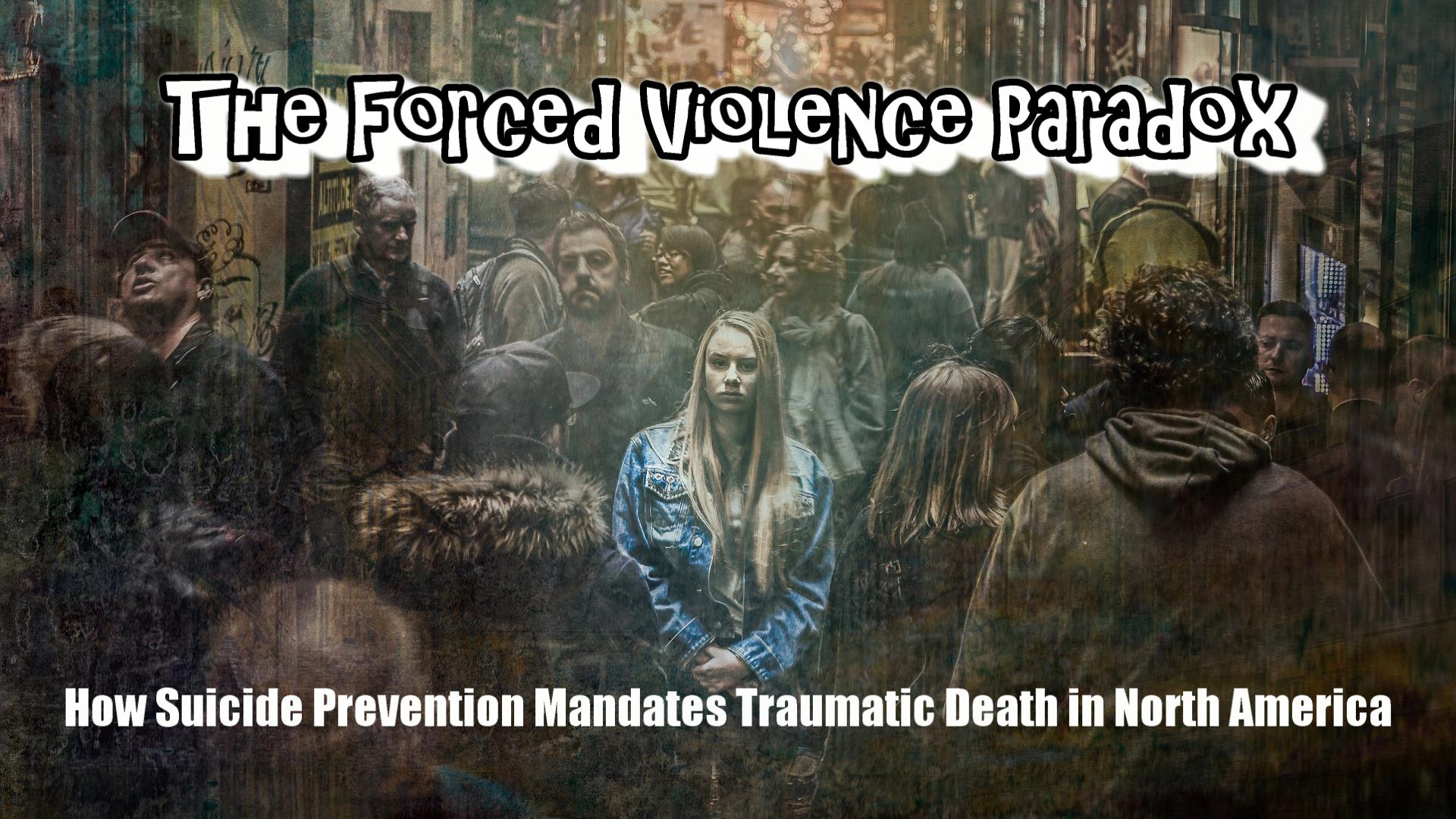

The philosophical case for recognizing voluntary death as an expression of individual autonomy has gained traction in recent years. This momentum is exemplified by the 2020 decision of the German Federal Constitutional Court, which affirmed the right to self-determined death as a core aspect of human dignity (German Federal Constitutional Court, 26 February 2020). Thomas Szasz was a key proponent of this perspective, arguing that suicide reflects “final freedom” rather than pathology. Contemporary legal and philosophical frameworks extend his legacy by contending that competent individuals possess the sovereign right to decide the circumstances of their own deaths (Szasz, 1999).
—
However, there remains a notable divergence in North America between the theoretical acceptance of autonomy in voluntary death and its practical denial. This essay addresses the ethical crisis emerging from this contradiction by first clarifying the concept of the “forced violence paradox.” This term refers to the situation where, although society claims to uphold freedom and autonomy, competent adults are denied legal and humane means to end their lives, compelling those determined to die to resort to traumatic, dangerous, and gruesome methods instead. The following analysis will outline how this paradox takes shape, examine its consequences for individuals and communities, and consider potential ethical frameworks for reform.
—
The Scale and Nature of the Crisis
—
Here in North America, a mature, competent individual who has carefully deliberated ending their life must face a cruel dilemma: without access to legal, safe, and dignified means for dying, they must either abandon their autonomous choice or attempt it through violent or risky methods. The scale is staggering, as completed suicides and severe attempts requiring emergency care affect over 100,000 people annually (CDC, 2023; Health Canada, 2022). Without appropriate options, people resort to violent methods—firearms, hanging, jumping from heights, or drug overdoses—which are physically traumatic, psychologically isolating, and often unsuccessful, causing severe injury and prolonged suffering.
—
The empirical reality of suicide methods reveals brutal consequences. Firearms cause about half of all U.S. suicide deaths, inflicting extreme violence and trauma on those who discover the body (Miller & Hemenway, 2008). Hanging and suffocation also account for many cases, involving prolonged distress and often discovered by family members in horrific circumstances. Drug overdoses, while seemingly less violent, frequently result in extended suffering or permanent disability (Gunnell et al., 2005). Jumping from heights traumatizes both the individual and witnesses, creating public spectacles of death. Individuals do not choose these violent methods out of preference but out of a lack of humane alternatives.
—
From Life Preservation to Compelled Suffering
—
This policy framework turns what appears to be an act of “preserving life” into a cruel mechanism of compelled suffering. By denying humane options while failing to prevent the act, the state mandates that anyone exercising “final freedom” must do so in an unnecessarily traumatic and violent way. Individuals who have carefully deliberated are forced to die alone, in secrecy, and in agony, rather than with dignity and support. The violence extends trauma to those who discover the body, first responders, and grieving families—a ripple effect of suffering that humane alternatives could mitigate (Maple et al., 2010).
—
Prohibiting assisted dying does not function as genuine suicide prevention. Research shows that where assisted dying is legal, overall suicide rates do not increase; rather, individuals who might otherwise use violent methods have alternative pathways (Jones & Paton, 2015). The Dutch experience demonstrates stable or declining suicide rates as access to medically assisted dying expands (Onwuteaka-Philipsen et al., 2017). Thus, prohibition does not save lives—it merely determines how deaths occur, ensuring they remain violent and traumatic.
—
The current framework creates a perverse incentive: individuals who might otherwise reflect and seek support are driven to act impulsively and in secrecy, fearing involuntary psychiatric commitment, loss of autonomy, and stigma (Cholbi, 2011). Instead of offering protection, these policies strip away the chance for genuine care and support during a critical period. Those needing counseling or alternatives are driven underground, unable to access support that respects their autonomy while ensuring decisions are fully informed and stable.
—
The Isolation Imperative
—
The medicalization of suicide, which Szasz critiqued extensively, contributes significantly to isolation. By framing all suicidal ideation as symptomatic of mental illness requiring intervention, the healthcare system eliminates the possibility of distinguishing between impulsive acts driven by acute psychiatric crisis and deliberate, long-considered decisions made by competent individuals facing chronic suffering or existential distress (Szasz, 1999). This categorical approach not only fails to respect autonomy but also undermines effective suicide prevention efforts. When individuals know that disclosure will automatically trigger coercive intervention regardless of their competence or the nature of their deliberation, they are incentivized to conceal their thoughts entirely, foreclosing opportunities for meaningful engagement that might genuinely address underlying concerns or provide alternatives (Mishara & Weisstub, 2016).
—
This isolation extends beyond the individual to their families and communities. Because suicide remains shrouded in stigma and secrecy, families are often left with profound guilt, unanswered questions, and the traumatic aftermath of discovering a violent death. They are denied the opportunity to engage in open conversations about their loved one’s suffering, to express their concerns and love, or to participate in a process of farewell that might provide closure and understanding. The prohibition thus multiplies suffering: it harms the individual seeking death, traumatizes those who love them, and perpetuates a culture of silence that prevents collective learning and compassionate response.
—
The Contradiction in Liberal Democratic Values
—
The failure to provide humane options for voluntary death is no neutral omission but a profound ethical violation that actively perpetuates isolation and anguish. It reveals a fundamental contradiction in liberal democratic societies: the assertion that individual liberty is paramount, except when it comes to the most intimate decision a person can make. We possess the right to make decisions about our own lives, bodies, and futures, provided those decisions do not directly harm others. This principle underlies protections for freedom of speech, religion, bodily autonomy in medical decisions, reproductive rights, and countless other domains of personal choice. Yet when it comes to voluntary death, this commitment to autonomy suddenly evaporates, replaced by paternalistic assertions that the state knows better than the individual what constitutes a life worth living (Dworkin et al., 1998; Battin, 2005).
—
The German Federal Constitutional Court recognized this contradiction explicitly, noting that “the right to a self-determined death includes the freedom to take one’s own life” and that this freedom “is not limited to situations defined by severe illness or a certain stage of life” (German Federal Constitutional Court, 2020). The Court emphasized that individual autonomy in matters of death is not contingent on external approval of the reasons or circumstances, but rather inheres in the fundamental right to human dignity and self-determination. This legal reasoning directly challenges the North American approach, which subordinates individual autonomy to state paternalism under the guise of protection.
—
The Harm Reduction Imperative
—
If prohibition does not prevent voluntary death but merely determines its form, the ethical imperative shifts from prevention at all costs to harm reduction—ensuring that those who do choose death can do so in ways that minimize suffering, preserve dignity, and allow for meaningful engagement with loved ones and counsellors while respecting their right to die in peace (Quill & Battin, 2004). This approach does not abandon suicide prevention efforts; rather, it recognizes that effective prevention requires distinguishing between different types of suicidal intent and responding appropriately to each.
—
For individuals experiencing acute psychiatric crisis, impulsive ideation, or suicidality associated with transient distress, intervention and support remain essential. Research indicates many suicide attempts are characterized by ambivalence, occur during periods of acute distress, and often do not reflect enduring desires to die (Joiner, 2005). For these individuals, crisis intervention, short-term psychiatric treatment, and social support can be life-saving and consistent with respect for autonomy, as they address temporary impairments in decision-making capacity.
—
However, for individuals who have reached a settled, long-considered decision to die—whether due to chronic pain, terminal illness, existential distress, or other reasons that they find compelling—the appropriate response is not coercion but compassionate engagement. This might include ensuring access to palliative care, addressing any treatable sources of suffering, providing opportunities for reflection and consultation, and ultimately, if the decision remains stable and informed, respecting their choice by providing access to humane means of dying (Battin et al., 2008).
—
The harm reduction framework also addresses concerns about vulnerable populations. Rather than relying on blanket prohibition that fails to protect while harming those seeking autonomous death, a regulated system of access to assisted dying can incorporate robust safeguards: assessments of decision-making capacity, waiting periods to ensure stability of intent, consultation requirements, and protections against coercion (Emanuel et al., 2016). Evidence from jurisdictions with legal assisted dying demonstrates that such safeguards can effectively protect vulnerable individuals while respecting autonomy (Downie & Schuklenk, 2021).
—
The Ripple Effects of Prohibition
—
The consequences of the forced violence paradox extend far beyond the individuals directly affected. First responders—police officers, firefighters, paramedics—are repeatedly exposed to traumatic scenes of violent death that could be prevented through access to humane alternatives. These professionals often suffer from post-traumatic stress, moral injury, and burnout related to their exposure to suicide deaths (Stanley et al., 2016). The prohibition of assisted dying thus creates occupational hazards for those tasked with responding to its consequences.
—
Healthcare providers face similar burdens. Emergency department physicians and nurses must treat the survivors of violent suicide attempts, often dealing with catastrophic injuries that result in prolonged suffering and permanent disability. Psychiatrists and therapists are placed in ethically untenable positions, forced to choose between respecting patient autonomy and fulfilling legal obligations to prevent suicide through coercive means. This creates moral distress and undermines the therapeutic relationship, as patients cannot trust that their disclosures will be met with respect rather than coercion (Austin et al., 2011).
—
Communities bear the collective trauma of public suicides—individuals jumping from bridges, buildings, or in front of trains, creating spectacles of death that traumatize witnesses and disrupt public spaces. These methods are often chosen precisely because they are available and effective, not because they align with the individual’s preferences. The provision of humane alternatives would substantially reduce such public deaths and their associated community trauma.
—
Finally, the prohibition perpetuates broader social harms by maintaining stigma and preventing honest discourse about death, dying, and autonomy. By treating all suicide as pathological and preventable, society forecloses opportunities for meaningful conversations about suffering, dignity, and the limits of medical intervention. This silence harms not only those contemplating suicide but also individuals facing terminal illness, chronic pain, or other forms of suffering who might benefit from open discussions about end-of-life options and values.
—
Toward a More Humane Framework
—
Addressing the paradox of forced violence requires fundamental shifts in policy, medical practice, and social attitudes. First, legal frameworks must recognize the right to self-determined death as articulated by the German Federal Constitutional Court, acknowledging that competent adults possess the authority to make decisions about the end of their own lives (German Federal Constitutional Court, 2020). This does not require abandoning all regulation or safeguards but rather shifting from blanket prohibition to regulated access that respects autonomy while protecting against coercion and ensuring informed decision-making.
—
Second, medical practice must move beyond the categorical medicalization of suicide toward a more nuanced approach that distinguishes between different types of suicidal intent and responds appropriately to each. This requires training healthcare providers to assess decision-making capacity without presuming that all suicidal ideation indicates mental illness, and to engage compassionately with patients considering voluntary death rather than defaulting to coercive intervention (Cholbi, 2011).
—
Third, social attitudes must evolve to reduce stigma and enable open conversation about voluntary death. This includes educational initiatives that present suicide as a complex ethical issue rather than simply a mental health crisis, public forums that allow for diverse perspectives on autonomy and dignity, and cultural shifts that honor individual sovereignty over one’s own life and death (Battin, 2005).
—
Fourth, harm reduction approaches must be integrated into how society engages with end-of-life decisions, recognizing that effective support requires respecting autonomy and engaging compassionately with individuals rather than relying solely on coercion and prohibition. This might include crisis intervention services that prioritize support over control, peer counseling programs that respect individual agency, and access to palliative care or other interventions that address the alleviation of suffering for end-of-life methods. Crucially, this framework must honor the competency of individuals who have reached a stable, considered decision based on profound, untreatable existential or personal suffering, independent of a specific medical diagnosis.
—
In addition, for healthy, competent individuals who qualify on existential grounds rather than medical illness, a parallel government-sanctioned entity would be necessary to oversee autonomous end-of-life decisions outside clinical frameworks. This entity would operate alongside—not replace—the medical system, which remains essential for those who are seriously ill. For self-reliant individuals facing existential suffering, this parallel framework would shift focus from a Medical Model (MAID) to a Competency Model—one that evaluates decision-making capacity and the stability of intent rather than medical diagnoses. Its primary function would be to assess whether individuals meet the criteria for autonomous choice, a process overseen by independent legal and ethical experts rather than physicians. Once a competent adult’s request is certified, the entity would provide legal authorization and immunity protections for any non-medical persons offering support. Crucially, this framework would also ensure access to peaceful options while maintaining strict safeguards against misuse, recognizing that healthy individuals can be more self-reliant in their approach while upholding the principles of harm reduction and individual sovereignty articulated by thinkers like Thomas Szasz.
—
Conclusion
—
The paradox of forced violence represents one of the most profound ethical failures of contemporary North American society. By affirming autonomy in rhetoric while denying it in practice, by claiming to preserve life while ensuring that death is violent and traumatic, and by imposing isolation and suffering in the name of protection, current policies create precisely the harms they purport to prevent. The result is not fewer deaths but more suffering—suffering that is entirely preventable through the provision of humane alternatives.
—
The path forward requires courage: the courage to acknowledge that prohibition has failed, that paternalism undermines rather than supports genuine care, and that respect for autonomy sometimes means accepting choices we would not make ourselves. It requires honesty about the limits of medical intervention and the reality that some suffering cannot be adequately addressed through treatment. Most fundamentally, it requires a commitment to human dignity that recognizes each person as a sovereign moral agent, capable of making the most profound decisions about their own existence.
—
The German Federal Constitutional Court has provided a legal and ethical framework for this transformation. The question now is whether North American societies possess the moral clarity and political will to follow suit, dismantling the cruel machinery of compelled suffering and affirming that the right to life includes, ultimately, the right to death on one’s own terms. Until that transformation occurs, the paradox of forced violence will continue to exact its terrible toll. What is supposed to be a protection of life becomes, in effect, a cruel device for imposing needless trauma, and the autonomous exercise of final freedom is transformed into an ordeal of isolation, violence, and unnecessary anguish.


1 Comment
Everything about this site feels professional and trustworthy. The rewards system is quite generous for loyal players. Check out wakanda123situs for a fun time.